


The Abhang – Namacha gajar
- March 27, 2026
- Posted by: CIF Admin
- Category: Blog
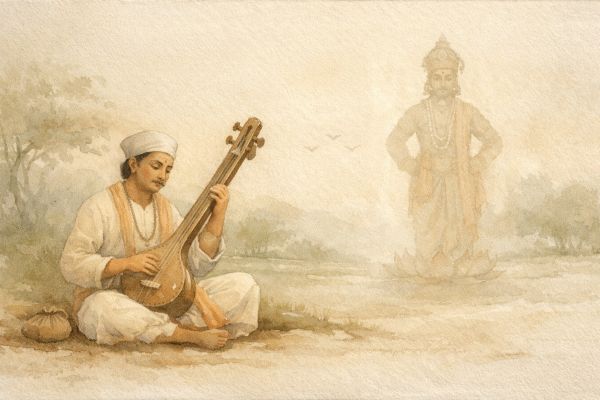
The Abhang – Namacha Gajar, by Sant Namdeo is a celebration of the power and glory of the Divine Name (Nāma). It describes a deeply devotional vision where chanting God’s name becomes the highest spiritual practice.
Verse 1
नामाचा गजर गर्जे भीमातीर ।
महिमा साजे थोर तुज एका ॥१॥
Nāmāchā gajar garje Bhīmātīr |
mahimā sāje thor tuj ekā ||1||
Meaning: The chanting of the Lord’s Name resounds and thunders across the banks of the river Bhima. Such immense and magnificent glory befits You alone, O Lord.
Word to Word Meaning
- नामाचा (Nāmāchā): Of the Name (of God)
- गजर (Gajar): Chanting / Roar / Resounding sound
- गर्जे (Garje): Thunders / Echoes / Resounds
- भीमातीर (Bhīmātir): The bank of river Bhima
- महिमा (Mahimā): Glory / Greatness
- साजे (Sāje): Befits / Suits
- थोर (Thor): Great / Immense
- तुज (Tuj): To You
- एका (Ekā): Alone / Only
Verse 2
ऋद्धीसिद्धी दासी अंगण झाडती ।
उच्छिष्टे काढती मुक्ति चारी ॥२॥
Riddhī-siddhī dāsī aṅgaṇ jhāḍatī |
uchchiṣṭe kāḍhatī mukti chārī ||2||
Meaning: Prosperity and spiritual powers (Riddhi and Siddhi) serve as maidservants who sweep Your courtyard, while the four types of Liberation humble themselves by clearing away Your leftovers.
Word to Word Meaning
- रद्धी सद्धी (Riddhīsiddhī): Spiritual and material powers/prosperity
- दासी (Dāsī): Maidservants
- अंगण (Angan): Courtyard
- झाडती (Jhāḍi ): Sweep
- उिच्छष्ट (Uchchiṣṭē): Left overs (from a meal)
- काढती (Kāḍhi ): Remove / Clear away
- मुक्ति (Mukthi ): Liberation
- चारी(Chārī): Four*
* As part of the broader Vaishnava traditon, the Varkari Sampradaya recognizes four main types of liberation
(Mukti) that a devotee can attain through Bhakti (devotion) to Lord Vithal. These are:
- Salokya (Same Plane/Realm): The soul resides in the same spiritual planet or abode (Vaikuntha) as the Supreme Lord.
- Sannidhya or Sāmīpya (Close Proximity): The soul lives in the immediate presence of the Divine, acting as a direct associate.
- Sārūpya (Same Form): The liberated soul attains a spiritual form with features as the Divine.
- Sāyujya (Complete Union): The soul merges entirely into the Divine, losing individual identity.
Verse 3
चारी वेद भाट होऊनि गर्जती ।
सनकादिक गाती कीर्ति तुझी ॥३॥
Chārī ved bhāṭ hoūni garjatī |
Sanakādik gātī kīrti tujhī ||3||
Meaning: The four Vedas have become like bards, loudly proclaiming Your excellence, while great sages like Sanaka and others sing of Your divine fame.
Word to Word Meaning
- चारी (Chārī): Four
- वेद (Ved): The Vedas (Ancient scriptures)
- भाट (Bhāṭ): Bards / Encomiasts (who sing praises)
- होऊनि (Hoūni): Becoming / Having become
- गजर्ती (Garjati ): Proclaim loudly / Chant
- सनकादिक (Sanakādik): Sanaka and the other ancient sages
- गाती (Gāti ): Sing
- कीर्ति (Kīrti ): Fame / Glory
- तुझी (Tujhī): Your
Verse 4
सुरवरांचे भार अंगणीं लोळती ।
चरणरज क्षिती शीव वंदी ॥४॥
Suravarānche bhār aṅgaṇī loḷatī |
charaṇaraj kṣitī Śiv vandī ||4||
Meaning: Multitudes of great deities prostrate themselves in Your courtyard. Even Lord Shiva bows down to the dust of Your feet upon this earth.
Word to Word Meaning
- सुरवरांचे (Suravarānchē): Of the great gods/deities
- भार (Bhār): Crowds / Multitudes
- अंगणीं (Angaṇī): In the courtyard
- लोळती (Loḷati): Prostrate / Roll (in devotion)
- चरणरज (Charaṇaraj): Dust of the feet
- क्षिती (Kṣiti): The Earth
- शीव (Shīv): Lord Shiva
- वंदी (Vandī): Bows / Pays homage
Verse 5
नामा म्हणे देव ऐसा हो कृपाळू ।
करी तो सांभाळू अनाथांचा ॥५॥
Nāmā mhaṇe dev aisā ho kṛipāḷū |
karī to sāmbhāḷū anāthānchā ||5||
Meaning: Namdev says, such is the compassion of my Lord; He is the one who protects and looks after those who are helpless and have no one else..
Word to Word Meaning
- नामा (Nāmā): Saint Namdev (the author)
- ह्मणे (Mhaṇē): Says
- देव (Dev): God
- ऐसा (Aisā): Such / Like this
- हो (Ho): Is / Indeed
- कृपाळू (Kṛipāḷū): Compassionate / Merciful
- करी (Kari): Does / Performs
- तो (To): He
- सांभाळू (Sāmbhāḷū): Protection / Caring / Looking after
- अनाथांचा (Anāthānchā): Of the orphaned / The helpless
– Translation by Vaishali Koparkar and Prasad Koparkar.
Leave a Reply Cancel reply
You must be logged in to post a comment.
