


Chandogya Upanishad – Part 2
- Description
- Curriculum
- Reviews

Sad Vidya, Bhuma Vidya & Dahara-Prajapati Vidya
The concluding chapters of the Chandogya Upanishad present some of the most celebrated teachings of Vedanta, revealing the identity of the individual Self with Brahman, and the means to realise this truth.
Chapter 6: The Oneness of Reality – Tat Tvam Asi
One of the most celebrated chapters of the Chandogya Upanishad, Chapter 6 presents the profound dialogue between the sage Uddalaka Aruni and his son Shvetaketu. Having completed his Vedic education, Shvetaketu returns home filled with pride. His father gently challenges him with a transformative question: “Have you learnt that by knowing which the unheard becomes heard, the unknown becomes known, and the unseen becomes seen?” Through a series of illuminating teachings and analogies, Uddalaka unfolds the vision of the one Reality underlying the entire universe.
Highlights
-
The metaphor of clay and its many forms, revealing the unity behind all diversity
-
Sat (Pure Existence) as the origin and essence of the entire creation
-
The significance of the Mahavakya “Tat Tvam Asi – That Thou Art”
-
Nine profound illustrations revealing the identity of the individual Self with the Supreme Reality
Chapter 7: The Infinite is Bliss – Bhuma vai Sukham
Chapter 7 records the inspiring dialogue between the great sage Sanatkumara and the learned sage Narada. Despite mastering the Vedas, sciences, arts, and scriptures, Narada confesses that he remains burdened by sorrow because he knows only words, not the Self. Sanatkumara patiently guides him through an inward journey from the finite to the Infinite.
Highlights
-
The progressive ladder of spiritual growth through fifteen stages of understanding
-
The distinction between the finite (alpa) and the Infinite (Bhuma)
-
Why lasting happiness is found only in the Infinite
-
The attainment of Svarajyam—true mastery over one’s own mind and life through Self-knowledge
Chapter 8: The City of Brahman & the True Self – Dahara-Prajapati Vidya
The final chapter turns the seeker’s attention inward, revealing the limitless Reality hidden within the human heart. Through symbolic teachings and the celebrated dialogue between Prajapati, Indra, and Virocana, the Upanishad leads the student to discover the immortal Self beyond the body and mind.
Highlights
-
The Dahara Ākaśa Vidya: the infinite space within the lotus of the heart
-
Understanding the body as the “City of Brahman” that houses the limitless Self
-
The instructive journey of Indra and Virocana in their search for Self-knowledge
-
The four stages of Self-understanding:
-
The waking self identified with the body
-
The dream self
-
The deep sleep self
-
Turiya—the ever-free, immortal Consciousness beyond all states of experience
-
- How the realization of the true Self frees one from sorrow, fear, ageing, and death
Schedule & Details
Dates: Starting 16 September 2026
Time: Every Wednesday | 6:00 – 7:00 AM IST
Language: English
Webinar Fees: ₹ 3000 | US$ 75
Mode: online via Zoom
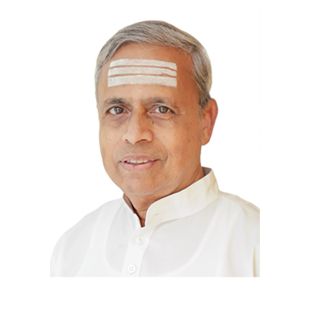
Facilitator: Sri. Anant Sarma Know more!
Webinar Format
-
27 Online sessions
-
The sessions will be streamed on Zoom. Those who miss the online session can listen to the recordings available in the dashboard.
-
Recordings will be available in the dashboard for a period of 6 months post the completion of the webinar.
Prerequisite
-
Availability of a computer with audio -video internet conferencing facility.
-
Prior study of Bhagavad Gita and a few upanishad-s is helpful.
-
Access to Zoom
Referral Books
-
Notes on Chandogya Upanishad (Pack of 3)
-
Chandogya Upanishad Commentary by Swami Lokeswarananda, Published by Ramakrishna Mission
-
Chandogya Upanishad With Commentary of Shankaracharya Translated by Swami Gambhirananda, Published by Advaita Ashrama
Contact Details
For further information or clarification
Contact: +91 92077 11467
Email: cifwebinars@chinfo.org
-
1
 Session 01 - Introduction & Mantras 6.1.1 - 6.1.3
-
2
 Session 01 - Introduction & Mantras 6.1.1 - 6.1.3- Audio
-
3
 Session 01 - Introduction & Mantras 6.1.1 - 6.1.3 - PDF
-
4
Session 02 - Mantra 6.1.4 - 6.2.1
-
5
Session 02 - Mantra 6.1.4 - 6.2.1 - Audio
-
6
Session 02 - Mantra 6.1.4 - 6.2.1 - PDF
-
7
Session 03 - Mantra 6.2.1. (contd.) - 6.2.3
-
8
Session 03 - Mantra 6.2.1. (contd.) - 6.2.3 - Audio
-
9
Session 03 - Mantra 6.2.1. (contd.) - 6.2.3 - PDF
-
10
Session 04 - Mantra 6.2.4 - 6.4.3
-
11
Session 04 - Mantra 6.2.4 - 6.4.3 - Audio
-
12
Session 04 - Mantra 6.2.4 - 6.4.3 - PDF
-
13
Session 05 - Mantra 6.4.4 - 6.5.4
-
14
Session 05 - Mantra 6.4.4 - 6.5.4 - Audio
-
15
Session 05 - Mantra 6.4.4 - 6.5.4 - PDF
-
16
Session 06 -Mantra 6.6.1 - 6.7.6
-
17
Session 06 -Mantra 6.6.1 - 6.7.6 - Audio
-
18
Session 06 -Mantra 6.6.1 - 6.7.6 - PDF
-
19
Session 07 - Mantra 6.8.1 - 6.8.3
-
20
Session 07 - Mantra 6.8.1 - 6.8.3 - Audio
-
21
Session 07 - Mantra 6.8.1 - 6.8.3 - PDF
-
22
Session 08 - Mantra 6.8.4 - 6.8.7
-
23
Session 08 - Mantra 6.8.4 - 6.8.7 - Audio
-
24
Session 08 - Mantra 6.8.4 - 6.8.7 - PDF
-
25
Session 09 - Mantra 6.9.1 - 6.11.3
-
26
Session 09 - Mantra 6.9.1 - 6.11.3 - Audio
-
27
Session 09 - Mantra 6.9.1 - 6.11.3 - PDF
-
28
Session 10 - Mantra 6.12.1 - 6.14.1
-
29
Session 10 - Mantra 6.12.1 - 6.14.1 - Audio
-
30
Session 10 - Mantra 6.12.1 - 6.14.1 - PDF
-
31
Session 11 - Mantra 6.14.2 - 6.16.3
-
32
Session 11 - Mantra 6.14.2 - 6.16.3 - Audio
-
33
Session 11 - Mantra 6.14.2 - 6.16.3 - PDF


