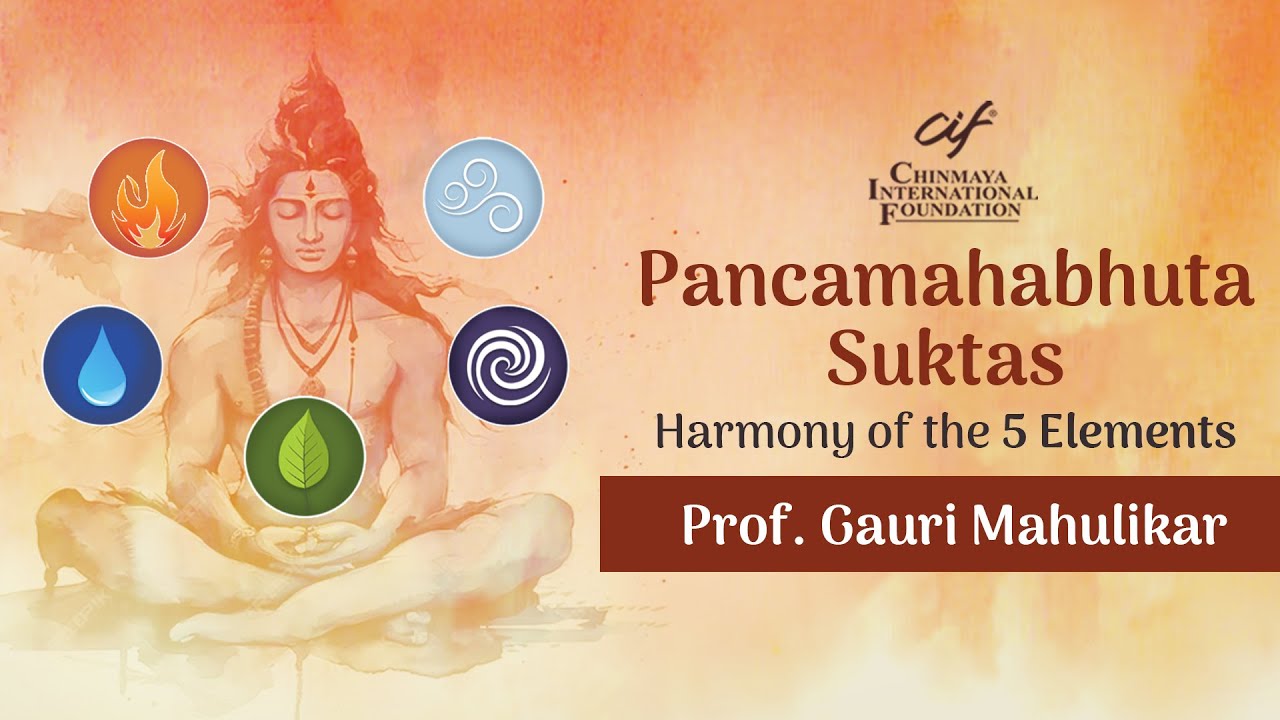
Panchamahabhuta Suktas

- Description
- Curriculum
- Reviews
Rigveda, the world’s most ancient text, contains 1054 hymns or suktas in total. These suktas predominantly describe natural phenomena personified as deities. The Vedic Seers deified the five elements – earth, water, fire, air, and space – that constitute the world.
Each of these elements, possessing unique characteristics, serves as the foundation for all creation, both living and non-living. Earth is the most tangible element, while space is the most subtle. The Rigveda exalts the vast spread of earth as the mother of all gods. Water, praised in various forms such as simple water, rain, and rivers, is considered the most valuable element. Fire, or Agni, is revered both as a cherished family member and as the sacrificial fire. Air, with its unrestricted movement, is known as Sarvagati. The Sky God, represented as Dyaus when paired with Prthivi or Varuna, symbolizes a protective canopy above and showers fatherly affection on all beings.
In these lectures, Prof. Gauri Mahulikar, Academic Director of CIF, explores:
- An introduction to the Vedic suktas related to the five natural elements:
- Bhumisukta (12.1) from the Atharvaveda
- Apsukta (7.49), Agnisukta (5.11), Vatasukta (10.168), and Varunasukta (7.88) from the Rigveda
- Additional references to Dyavaprithivi as eternal parents
- The etymology, word-by-word meanings and translations of these Vedic suktas with various interpretations
- A comparative study with other suktas related to the same elements
Prof. Gauriji’s insights provide a deep understanding of the Vedic hymns and their significance in portraying natural elements as divine entities.
These videos were recorded during a webinar conducted at Adi Sankara Nilayam in January 2024.