


Lessons In Loving, Leaving And Living
- January 4, 2026
- Posted by: CIF Admin
- Category: Celebrating Gurudev
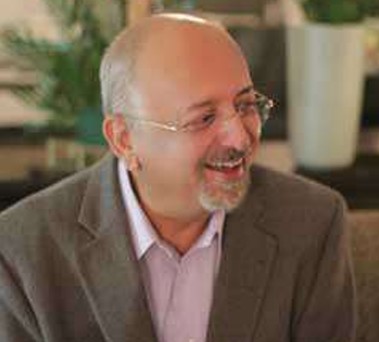
Anil Sachdev has known Gurudev since 1959.The entire family has been completely immersed in devotion to Gurudev.
1992 December – A few months before Gurudev went to San Diego, Anil Sachdev and his family spent a very long time with Gurudev in Sidhabari. Gurudev was known to retreat to Sidhabari before long foreign trips. So Anil ji and his family stayed with Gurudev at Sidhbari, and spent New Year’s eve with him.
Naturally for anyone to get this opportunity to be with the Guru as Time makes its changes, is most pleasing and satisfying. So there they all were, sitting in the beautiful rose garden, reveling in the idyllic surroundings and nature offering her best to Gurudev. It was evening, soft breeze blowing, a light twitter of birds, and soon the young women from the village came by and sat around Gurudev singing soulful bhajans …
Anil ji was overcome with divine joy. He said to Gurudev, “Swamiji, this is like heaven, to be with you, the Dauladhar mountains flanking us from all sides, this bhajans, the evening….”
Gurudev said, “Even this is a form of attachment! No doubt this is a satvik environment, feels good and ….” and he laughed.
There was poignancy in Gurudev’s words and Anil ji reflected on that even if he continued to feel the joy of the moment. He says, “In hindsight he was preparing us in a manner of speaking and even forcing us to detach from environment-aided joy. He was trying to convey, ‘Don’t say I will come to Sidhabari to revel and partake of this environment, to be with Swamiji, to be inspired. No doubt all this aids a satvik mood which inspires but do not think satwa lies here with the Guru. Don’t be attached even to satva! Such words can appear harsh and unbearable and it was a very deep moment for Anil ji.

But the days that followed only intensified the Guru’s presence aided by the leela he displayed! The joy of being with the Guru was unabated. A bhandara (community kitchen/dining) was organized for the villagers. Gurudev himself personally supervised the bhandara, where many 100s of villagers came and ate. The bhandara began at 11:30 in the morning and carried on till 4 pm. Gurudev encouraged everyone to serve in the kitchen, chop vegetables, clean the rice, wash the utensils, and later also serve the villagers. “He taught us the joy that was there in preparing for the bhandara and serving with love and joy hose who awaited Gurudev’s blessings,” says Anil ji
“It was a great example of coming together to serve together not mindful of where we came from,
all working together in the Chinmaya family spirit. Gurudev made sure that all villagers were hosted well and treated with utmost love. He cared about how they were served, looked after and attended to. He himself had planned everything meticulously to the last detail.
“It would be so cold, those December evenings and we would sit out on the lawns basking in the mild sun and as that sun also retired, the breeze would get colder and slowly shawls and drapes would come out. Gurudev would unobtrusively pull the shawl over his legs and then the Wimbledon recordings would come out and he would retreat into his pet joy: tennis. Gurudev loved tennis far too much. “
Anil ji grows wistful and nostalgic. Once one begins remembering, the memories flow like the Ganga… silently, sweetly refreshing the mind with its serenity and satva. For they are memories of the Guru… Another poignant memory occupied centerstage and Anil ji said:
“This was soon after the Babri Masjid demolition… we would talk to him to know his mind. We knew what made him furious and we knew what he did not worry about. But the important memory that he left for me, maybe knowing the kind of times that will come, was one that startled me silly, on a flight.
“We were on a flight from Delhi to Mumbai. He was sitting in front of me. A Muslim leader of the time a clergyman, was sitting next to Gurudev. In my small mindedness, I was anxious that the combination may not augur well. If they have a fight, what will we do? But what do you know! They were talking peacefully…! I was straining to ‘be in the know’ that they would not begin talking or saying things. The next thing I know, they were greeting each other warmly, almost like long lost acquaintances and soon they were laughing together. Obviously they knew each other… their voices were soft, measured…and there was a lot of affection. I was surprised; nothing made sense; I would definitely take it up with Gurudev later. Mind you, all this was within days of the demolition.
“As we drove to the Powai ashram from the airport I talked to Gurudev. I said,
“Swamiji, this is surprising, is he a friend?”
Said Gurudev, “Why should we have a problem with each other?” It was how he answered with a question. “Did you expect us to argue?” (I had expected worse, I am sure he knew!!) And he laughed. Clearly they both existed on a different plane of Supreme peace and understanding,
patience and love for the people. They had genuine love and respect for each other. Gurudev’s responses fill the heart with the greatest of learnings. He said to Anilji, “If this problem was left to (well-minded) religious leaders it would have resolved long time back; we would have found a way forward. But the politicians do not want this problem to be solved. In the long term the sensible religious leaders will find a harmonious solution that is for greater good.”
Anil ji’s heart warmed. Reminiscing, he says, “What came to me was this: we have to move on from what has happened to a way of collaborating, where we can peacefully coexist, each one worshipping as he wants to, his God.
“This is what Gurudev was saying, what he wanted me to know, what he wanted us to know. That we as a collective electorate, must be able to persuade our political leaders, so that both communities can worship together and coexist…” Gurudev was always for peaceful happy coexistence in brotherhood.
-Excerpt of an article from Celebrating Gurudev
Leave a Reply Cancel reply
You must be logged in to post a comment.